Today I’m back to “red flags.” These are the hints that something may be awry. Also called gut feelings, intuition, instincts, it refers to trusting yourself when you’re uncomfortable or sensing something am iss. Some red flags are subtle, some really blatant. They are all specific behaviors that somebody is doing that bumps into one of your boundaries.
Red flags also come in different “flavors.” By that I mean they are tactics to try to take down specific boundaries. Consider these three red flags, and what they have in common:
▪ Keeps asking you out after you’ve said no
▪ Pushes you to drink alcohol or use drugs
▪ Refuses to wear protection when engaging in sex
If this were a class setting, I’d give you a few seconds to think about it. If you want to, take a bit of time yourself to think about these three.
What they have in common is an explicit rejection of boundaries you’ve already stated.
If you’ve already said no to dating, repeatedly asking is not flattering. At best, it’s awkward. At worst, dangerous and (very) rarely life-threatening. Do you really want to go on a date with someone who ignores your boundaries?
Alcohol and drugs are known to impair our cognitive functions and physical reactions. Indulgence should be a choice. If someone is pressuring you, wonder why. Never underestimate the human need to fit in, to belong. Perpetrators will frequently exploit that, especially in a social situation.
Refusing to wear protection when having sex. What could possibly go wrong? The statement assumes you’ve already had a discussion, or you’re having the discussion. Maybe you’re not ready for parenthood, or don’t want to deal with an STD. Now do you think the person with whom you’re having this discussion is unaware of potential risks? They’re aware all right, just don’t feel it’s a big deal for them, and your boundary is just a nuisance.
As I’ve already said, the flavor of these three red flags is that of explicitly negating your boundary. Of saying your needs are just preferences, probably trivial, and not taken seriously. You may be past the state of sensing something amiss, you could very well be experiencing some strong feelings of violation, or embarrassment, or even shame that your boundaries were disregarded. We all know that many boundaries do change over time and with different people, and you get to decide which are more fluid and which are more fixed. Because your freedom to make your own choices, to be able to trust yourself in sensing something wrong, is essential to real personal safety.
Speaking of which, our Personal Safety Essentials class is happening tomorrow night. Self-Defense for Teen Girls ages 12-14 is this coming Sunday, and Self-Defense for Teen Girls ages 15+ is March 13th (but that one may be full now). I should be posting a Spring schedule in the next week or so.
Stay safe, live life.

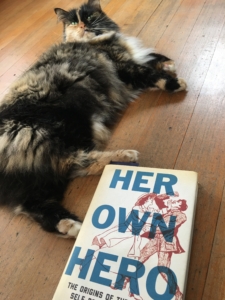
 tend to cross her feet, and folded her arms, not exactly across her body but in front. Those aspects of her body language were what we self-defense teachers may have called “submissive,” if we restrict ourselves to that narrow continuum of submissive to assertive to aggressive. Which points more to shortcomings in our attraction to oppositions, contrast, and dichotomies. Amy came across as both attentive and relaxed, not aggressive, not assertive, not trying to define and stick her boundaries, and her body language — rather than submissive — was an invitation to connect.